5 Top Takeaways from London Tech Week 2026
AI Is Easy to Access, Hard to Apply Well
London Tech Week 2026 made one thing clear: AI has moved from experimentation to application. The technology is easier to access than ever. The harder question is how businesses apply it well, connect it to commercial outcomes and build the foundations needed for it to scale. Here are five things that stood out, and what they mean for founders, investors and leadership teams.

The shift we saw at London Tech Week
AI dominated London Tech Week 2026. That was expected.What felt different this year was the tone of the conversation.
Last year, much of the discussion centred on understanding AI, testing tools and exploring what might be possible. This year, the focus moved firmly towards application.
How do we build businesses with it? How do we move faster? How do we solve real problems? How do we create long-term value?
That shift matters. AI is no longer being treated as a distant technology trend. It is becoming part of the operating reality for founders, investors, CMOs, CTOs and senior leadership teams.
The question is no longer whether AI will influence how businesses grow. It already is.
The better question is: where should AI be applied, how should it be governed, and what value is it expected to create?
1. AI is now easy to access
Across the week, one theme came through clearly: access to technology is no longer the main barrier.
Microsoft Copilot‘s session reflected a more optimistic view of AI’s role across productivity, education, healthcare and business. The message was clear: AI is becoming available at every level, from no-code and low-code tools through to full AI development stacks.
That changes who gets to participate in building digital solutions.
The Perplexity session pushed this further, exploring how the role of the computer itself is changing. Historically, computers processed information. AI is now moving us closer to systems that reason, interpret and help humans make better decisions.
That creates opportunity. It also creates pressure. If more teams have access to powerful tools, businesses need more clarity around what should be built, why it matters and how success will be measured.

2. The age of the builder is here
One of the strongest themes came through the Lovable session: the person closest to the problem should be able to build the solution.
That is a powerful shift. AI-powered platforms are reducing the distance between idea and prototype. Founders, operators, marketers, product leads and domain experts can now test concepts, build internal tools and improve workflows faster than ever before.
The advantage is moving closer to the person who understands the problem. That could be a founder spotting a niche opportunity. A sales team seeing friction in the customer journey. A healthcare professional understanding where a workflow breaks. A finance team identifying where manual reporting slows decisions down.
This is exciting. But it also creates a new challenge. If everyone can build, building alone becomes less of a differentiator.
The advantage shifts to clarity, taste, customer understanding, brand trust, experience quality and execution. AI may help more people build. It does not automatically mean they will build the right thing.
3. Speed is useful. Direction matters more.
The investor conversations were consistent: speed matters. Founders who can ship quickly, learn quickly and communicate a simple vision continue to attract attention. There was a clear focus on momentum, distribution, clarity and team quality.
One line stood out: “The team you build is the company you build.”
It is a useful reminder that technology does not replace organisational capability. It amplifies it. A strong team can use AI to move faster, learn faster and make better decisions. A misaligned team can use the same tools to create more noise, more complexity and more disconnected activity.
This is where many businesses risk confusing speed with momentum.
Speed is output. Momentum is progress. Many businesses are not moving faster — they’re firefighting at scale.
A business can launch more campaigns, ship more features, create more content and automate more workflows without becoming more effective. If the foundations are weak, AI can simply help teams make poor decisions faster.
That is the uncomfortable truth. AI does not remove the need for strategy. It makes strategy more important.
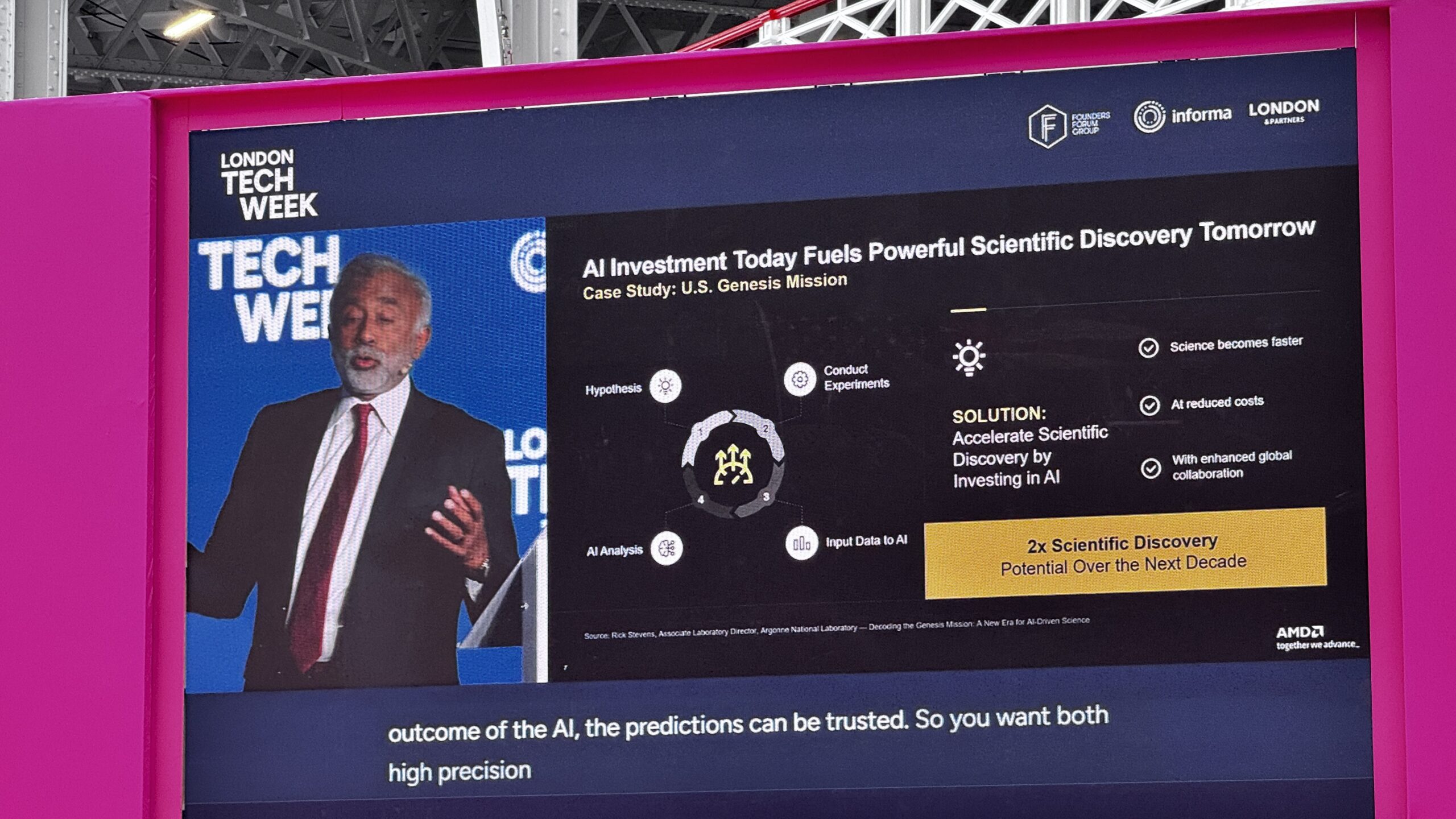
4. AI adoption and AI readiness are not the same thing
The optimism at London Tech Week was impossible to ignore. And rightly so. The UK has a real opportunity to play a meaningful role in the next phase of AI. The conversations around sovereign AI, infrastructure, compute and hardware showed that this is not just a technology story. It is an economic, political and commercial story.
The AMD and infrastructure discussions brought this into focus. AI does not exist in isolation. It depends on chips, data centres, compute capacity, energy, policy, investment and skills.
The same is true inside businesses. AI does not create value simply because a company has access to the tools. Value comes from the foundations around it: data quality, governance, customer experience, team adoption, Martech integration, measurement and decision-making.
Many organisations are still working through the basics. Where does AI fit? Which teams should use it? What data should be connected? Who owns governance? How do we protect customer experience? How do we measure ROI? What should we automate, and what should remain human?
These are not side questions. They determine whether AI becomes a growth advantage or another layer of operational complexity. Board-level enthusiasm is rising quickly. Implementation maturity is not always keeping pace.
For many businesses, the temptation will be to adopt more AI tools. That may help in places. But AI readiness is not a software procurement exercise — it’s a business readiness challenge. It requires leaders to understand where AI can genuinely improve performance, where it can reduce friction, and where it might create risk if applied without enough thought.
Not sure where your business stands? The Polar Growth Stress Test gives you a personalised report on your biggest growth bottlenecks, in under 5 minutes.
5. Customer experience still matters
The ElevenLabs session was a strong reminder that AI is not only about productivity and automation.
Voice AI is moving beyond scripted bots and rigid support flows into more natural, responsive and personal experiences. The examples around accessibility, education, public services and voice restoration showed the more human side of the technology.
That matters because customer experience will become one of the defining battlegrounds for AI adoption. As more interactions become AI-supported, businesses will need to think carefully about trust, tone, usefulness and emotional intelligence.
A faster experience is not automatically a better one. An automated journey is not automatically a more human one. A personalised message is not automatically more meaningful.
The best use of AI will reduce friction without removing care. It will support teams without flattening the customer experience. It will make businesses more responsive without making them feel less human. That is a brand challenge as much as it is a technology challenge.
If you’re thinking about how AI is changing the way customers find you in the first place, this is worth a read →

Our conclusion
London Tech Week 2026 made one thing clear: AI is now easy to access, but hard to apply well.
The businesses that win will not simply be the ones with the most tools. They will be the ones that can connect technology to clear commercial outcomes, strong customer experience and trusted digital foundations.
For founders preparing for funding, that means being able to explain how AI supports growth, not just how it appears in the roadmap. For investors, it means understanding whether a business has the foundations to scale AI responsibly and commercially. For CMOs and CTOs, it means working together to ensure brand, data, Martech, platforms and customer journeys are aligned before complexity compounds.
The opportunity is not just AI. The opportunity is knowing where AI creates genuine value, where it does not, and how to integrate it into a digital ecosystem that can scale.
That is where we come in. We partner with founders and investors at the point of funding — ensuring brand, digital platforms, customer experience and Martech are ready to scale.
Because the technology is moving quickly. The hard part now is turning ambition into measurable outcomes.
Ready to turn AI ambition into real results?
Get in touch with Polar London →